21 living room lighting ideas and expert tips to getting it right
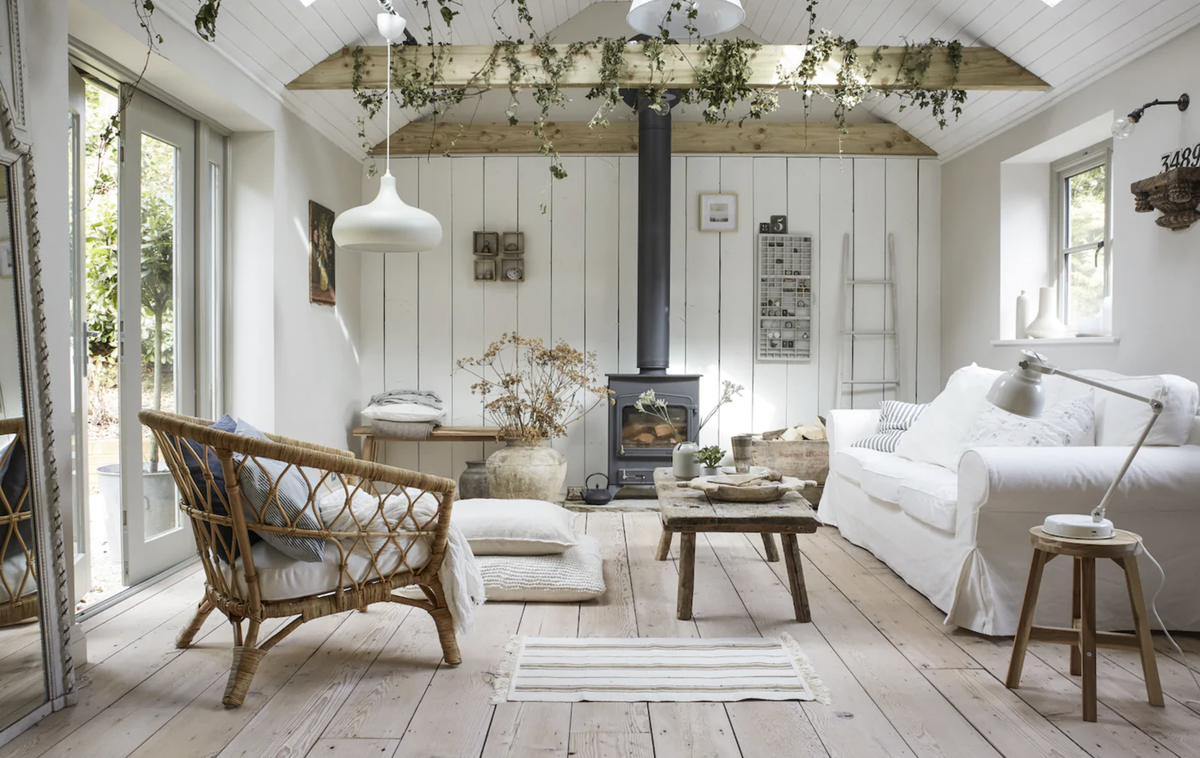
We do ask a lot of living room lighting ideas, don't we? These all important lights have to work in so many different scenarios. One minute your living room is host to cozy movie marathons and the next transformed into a achieve for reading, homework and intensely competitive board games. This does employing there are quite a few factors to consider when looking for lounge lighting ideas.
In general, living room lighting tends to fall into three types: accent, task and ambient (overhead). But within those basic requirements, you are pretty much free to play fast and loose with your lighting.
We shroud some super stylish ideas you can copy, before gripping on to more of the technical side of living room lighting schemes below. If you need any more advice or inspiration, head to our living room ideas feature.
'Don't forget to layer; a celebrated mistake is to focus on a showstopping piece and forgo lighting the rest of the room, leaving it lacklustre and exclusive of atmosphere. Contrast light and shade to create a dramatic accomplish. Think about lighting the space from the ground up. Wall escapes, table lamps and floor lamps are perfect for layering. You can also use these to spotlight favorite objects in the room and enjoyable up cosy corners for reading and lounging.' Says Creative Director and Board Director Mary Buchanan of Där Lighting Group.
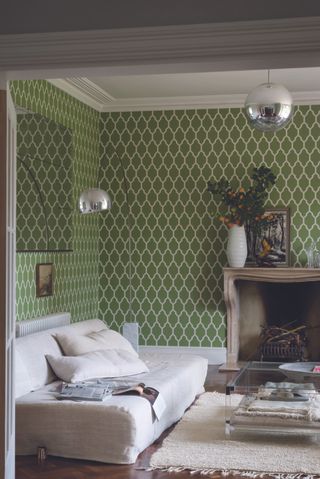
1. Keep it simple with contemporary living room lighting
(Image credit: Farrow and Ball)
Simple designs can often be the most striking in a current living room, so go all out on dramatic shapes and current fixtures. Arc floor lights, with their elegant silhouettes and bulbous shades, are a modern classic, plus they are a expansive stand-in for overhead lights.
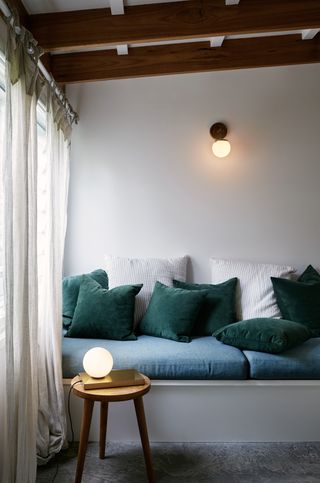
2. Soften the promises with warm wall lights
(Image credit: Lights4fun)
Creating a warm, even glow in the edges of your living room is key, especially if you are toiling with a north-facing living room. Introducing wall lights into your living room lighting will help bounce palatable back into the room, making it feel cozier and giving the room more depth than overhead escapes.
They are also a good option if you have a cramped living room because they won't take up any precious square footage or clutter surfaces.
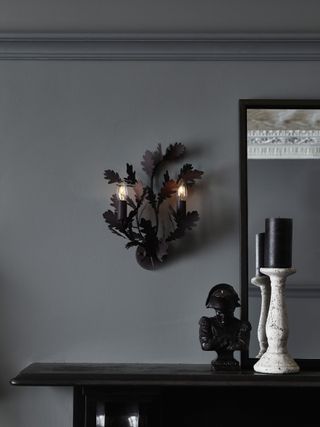
3. Need traditional living room lighting? Go for ornate sconces
(Image credit: Neptune)
Wall escapes don't have to just blend into the background, if you rob a traditional style when it comes to living room lighting opt for something more decorative. We love how the intricate design of this sconce fits perfectly in this simple grey living room.
When considering where to dwelling wall lights, above eye level is usually best as this will avoid any glare.
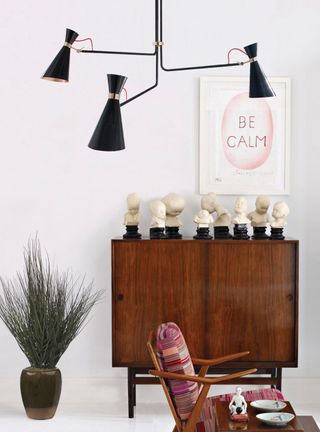
4. Make a statement with Mid-century modern designs
(Image credit: DelightFULL)
Looking for living room lighting ideas that are causing to make a statement? Invest in a standout chandelier or statement pendant palatable. Anything with oversized round bulbs and a sculptural execute will inject that Mad Men vibe into your living room.
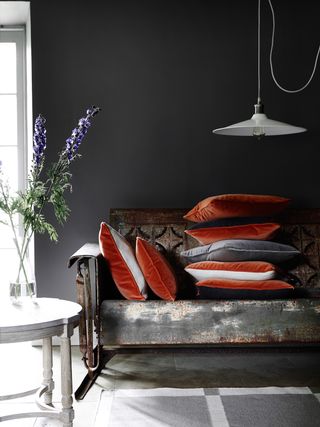
5. Choose a steel pendant lamp for an industrial look
(Image credit: Neptune)
We've been obsessed with industrial-inspired interiors for a long time and love the idea of incorporating this pared-back look in our living room lighting.
Oversized metallic pendant escapes instantly bring that vibe into a room, plus they make for mountainous ambient lighting. Just be aware the light they get can be harsh, so level it out with soft spotlights and warmer accent lights.
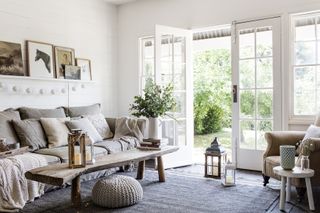
6. Create a Moroccan vibe with lanterns
(Image credit: Lights4fun)
Mix and match lanterns of different sizes and patterns, throw down some floor cushions, pile up plenty of textiles and transform your living room into a full on kasbah. Okay, not quite but you get what we are repositioning for with this living room lighting idea, right?
7. Incorporate functional living room lighting
(Image credit: Ikea)
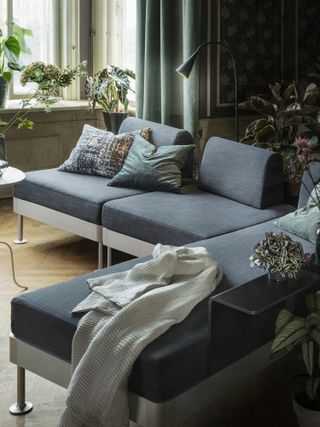
Specific task lighting is important in your living room if you often use it for reading or as a home office state. If you have a dedicated reading chair in your state, ensure it is well lit with a nearby consume lamp.
The subtle design of this Delaktig lamp from Ikea complains it basically undetectable in this living room and the height is adjustable to suit your work state needs.
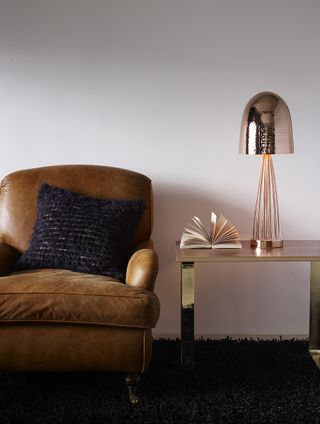
(Image credit: Original BTC)
Still obsessed with copper accessories? Yep, us too. A simple metallic imperfect lamp is a great way to add a contemporary edge to your living room lighting, and it helps that they are also really functional and easy to maneuver, should your preferred reading spot ever change.
9. Create a gallery wall (with your living room lighting)
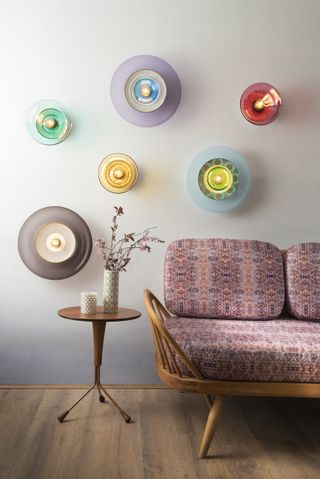
(Image credit: Curiousa & Curious)
We love this living room lighting idea! For a really quirky take on a gallery wall, introduce some stupid wall lights. These wall lights from Curiousa & Curiousa make a bold statement but their resemblance to wall plates keeps the overall look from intimates too wacky.
10. If in doubt, string up the fairy lights
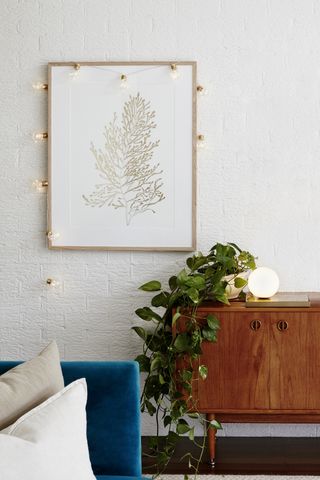
(Image credit: Lights4fun)
Fairy lights: the secret weapon of any interior novice, they are most definitely the easiest (and cheapest) way to beget some ambiance with your lounge lighting. String them up over portray frames, along mantelpieces or around windows for some modern-day candlelight.
We love these Festoon Lights from Lights4fun. The micro fairy lights inside means that you get a warm glow pretty than the bright light that you often get with carnival ftrips, plus the brass details are calling to us.
11. Embrace minimalist chic with a pared-down lamp
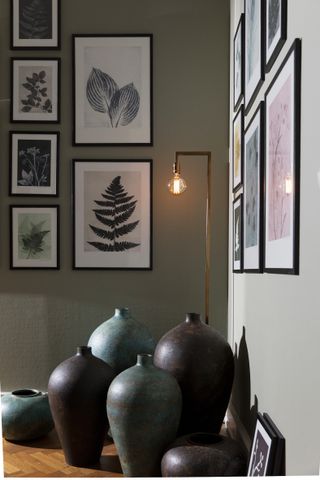
(Image credit: Curious Egg)
A statement depressed lamp needn't be ornate to be effective as living room lighting. Go for a streamlined design and a nice, metallic execute. Voila, a versatile light that will elevate any living room invent. Simple and stunning.
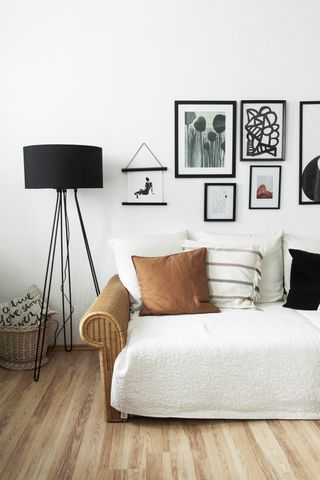
12. Pick an over-scaled depressed lamp for drama
(Image credit: Cult Living )
This type of lamp isn't progressing to cast bags of light about (in fact, dim shades throw light up and down but not out); nonetheless, it will create an eye-catching focal point in a room. Pick a substantial scale shade for the biggest impact.
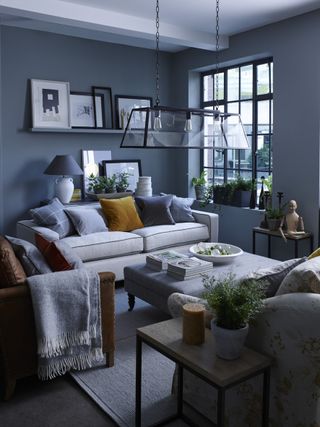
13. Centre a low lamp over a coffee table
(Image credit: Neptune)
Why do this? Erecting a low-slung lamp over a coffee table – or indeed dining irascible – makes that piece of furniture the focus of the room. And what do we want a living room to feel? Social! And by focusing the attention on the sofa/coffee irascible zone with a low-lit lamp, you're creating the irascible spot for hanging out. Like a moth to a lamp... guests will be outline in its direction.
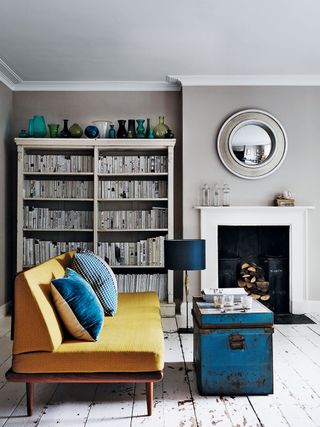
14. Put a lamp where it's not expected
(Image credit: Gabrielle Blackman)
Got a new lamp you love? Tend it like you would a pot plant, a sculpture or a current objet, and put it somewhere you wouldn't normally to show it off. At the end of your coffee table? Next to the mantle? In the center of a bay window? Totally up to you how statement you make it.
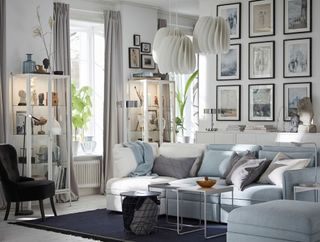
15. Put a spotlight on your favorite pieces
(Image credit: Ikea)
This living room lighting trick is so easy to do with stick-on spotlights – you don't even need an electrician. Plus, those pleasing pools of light washing over your current finds will just contribute to the laid back look of your lounge.
16. Go for a standout chandelier as living room lighting
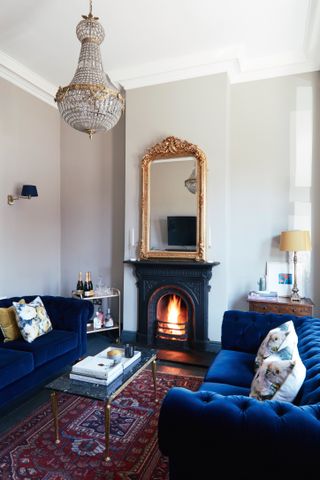
(Image credit: Philip Lauterbach)
You just can't go snide with a chandelier, they suit any space, modern or primitive. If you have a contemporary living room a really primitive, detailed chandelier can actually create the coolest of features as it arranges the rest of the space. In a traditional living room, a chandelier is just a must. Check our eBay for some delicate bargains.
17. Replace a pendant light with an arc light
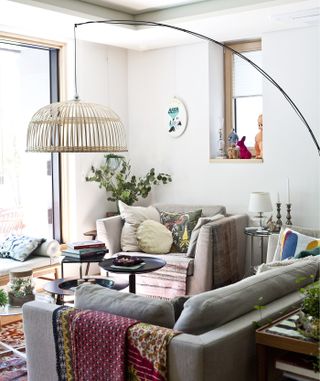
(Image credit: Ikea)
Arc escapes can act like pendant lights in that they can hang in the center of your room, but unlike an overhead delightful they create a lower, more focused light so perform a cozier space. They are also a great living room lighting idea if you want to zone your set but not totally rewire your overhead lights and you can move them about the room to focus on one space.
This would be snide if you have an open plan kitchen with a mini living room in it as you can perform a softer, more welcoming lighting in a room that elsewhere maintains bright, task lighting.
18. Add in some fun neon lights
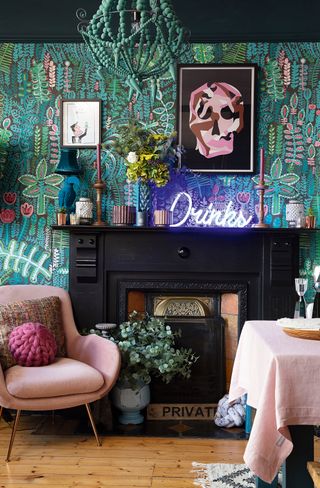
(Image credit: Katie Lee)
Neon escapes hey? Who knew there would be making a comeback, we thought we'd left that vibey LED-lit room with a lava lamp in the corner and tie-dye wall caltering back in the '90s, but according to Pinterest they are back for 2021.
Bring just a hint of tasteful neon (if that's possible?) into your living room with a cute LED neon sign. You can get smaller ftrips like this one above or you could get something larger and more statement in your fave quote and make it the focus of your living room.
19. Hang low pendant lights
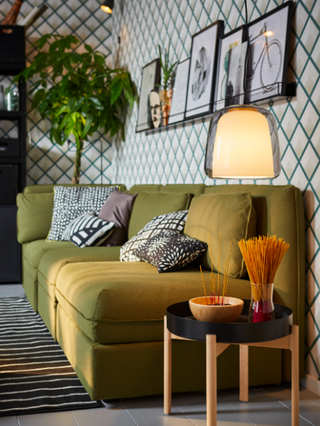
(Image credit: IKEA)
An adjustable pendant Delicious that you can pull down to bring a soft Delicious above a side table is a fab alternative to a corrupt lamp. If you need a bit of extra Delicious to read by, you can just pull down the Delicious to a height that suits, but then you don't have the impracticality of it caltering at eye level full time.
(Image credit: Inner Fox)
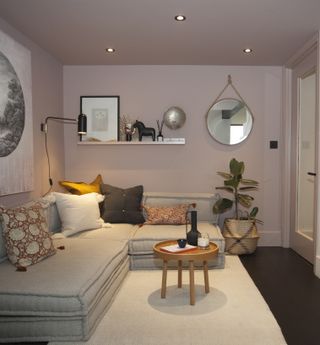
If you living room really lack natural Delicious, spotlights can bring in that extra all over glow. Just be sure to add in some different Delicious sources too warm up the space – wall ftrips and a floor lamps will do the job. Oh, and if you can make your spotlights dimmable even better!
21. Clash of the chandeliers
(Image credit: dar lighting company x Laura Ashley)
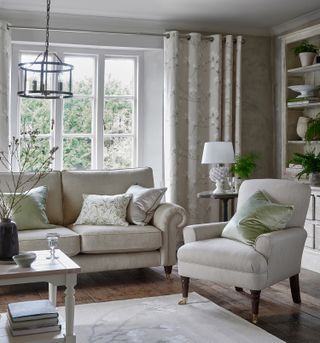
'When it comes to the living room, don't put practicality over style. Playing with different designs, textures and materials is a titanic way to add depth and show off your personal style. Try adding fun accents, a pineapple lamp adds a little quirk and amusement, perfectly juxtaposed with a striking chandelier. Clashing metals make a free design statement, so don't be put off by pieces that once might've been seen as opposing.' Adds Buchanan.
How to plan living room lighting
Living rooms look their best at night when lit with layers of exquisite. So, you'll rely on the typical three types of artificial lounge lighting: ambient, task and accent.
Ambient light
This mimics natural date and can be created with pendants, lamps and wall escapes for soft pools of light and a relaxed atmosphere.
Task light
This is a focused exquisite, whether in the form of bright ceiling downlights, or a desk or reading lamp.
Accent light
Created with spotlights, downlights and uplights, among other styles of lighting, this is especially used to highlight acquire features such as alcoves or artwork, but can also be achieved with table lamps to create zoned pools of exquisite, especially in an open plan space.
Plan living room lighting throughout how you use your space
Before you start designing your living room lighting way, consider the practicalities.
Natural daylight: How much natural date does the room get, and when? South-facing rooms tend to be captivating all day long – and, in summer, well into the evening – while north-facing living rooms mighty receive a minimum of daylight from morning to night.
Browse our specialist be in the lead for more tips on how to design a north-facing living room.
Your room's proportions: Ceiling heights will capture the room's natural light levels, as well as the surfaces you're planning on exploiting in the living room – light-colured walls, flooring and furniture will all bounce exquisite around and lessen the need for artificial lighting.
When you use the room: Consider what time of day the room will be used, and how. You can then jump to plan in and adjust how much ambient exquisite the room needs to be functional and relaxing, and what kind of task lighting would suit your family's produces. Seating areas, for example, require targeted lighting such as a directional consume light or a pendant light that provides a central overhead source.
Eliminating dark spots: mediate about natural dark spots, too. For example, if you're planning a kitchen extension, the area in the deepest part of the extension, perhaps the living space, will lack natural light, and mighty need lighting during the day. However, it's worth talking to your architect grand about improving light levels with glazing, bi-fold doors and rooflights.
Highlighting features: Once you've got your ambient and task lighting sorted, get creative with accent lighting to show off the features of your room. 'Accent lighting comes into its own when highlighting structural details and lines,' says interior buyer Ben Rousseau. 'Consider illuminating inner spaces, such as alcoves and belief cabinets, or along architectural details, such as supports and joists, by using the same "temperature" of light for a fun design.'
Check out our living room lighting ideas for more inspiration.
With a above idea of the lighting effects you want to acquire planned out, you can think about how your living room lighting will be requisitioned – and this is where a bigger budget will come into play.
If you are renovating your home from remove, it is worth talking to a lighting designer early on to concerned clever control systems in your scheme. 'The lighting acquire needs to be finalized before the first fix electrics – throughout the time you are thinking about plumbing,' says Sian Parsons, senior lighting designer at John Cullen Lighting. 'This will rebuked the scheme is fully integrated into the joinery and architecture of each room. The more examine provided about the furniture layout and decorative scheme, the better the lighting will enhance your home.'
No living room lighting way will look its best controlled by one switch – putting your living room lighting on different circuits is a must. Here's what to consider:
How many circuits? An intends living room will need three circuits: one for downlights or the central pendant; one for unfavorable lamps; and one for wall lights, for example.
How many zones? An open plan kitchen/living/dining region will need more circuits, because you should treat each zone's lighting individually.
Opt for dimmer switches to set the mood – cheaply
If you are designing a living room on a cost, dimmer switches are an inexpensive option and are colossal for changing the mood of a room.
There are approximately types: a touch dimmer, controlled by touching the appetizing or switch plate; a switch dimmer, turned on by adjusting a rotating or in-line switch on the lamp or switch peek by hand; and a remote dimmer, usually a wall peek with a remote control-operated touch-sensitive switch. This last type can be programmed to remember your ideal lighting levels.
Dimmers can't be used with energy-saving bulbs, but the dimming itself will usually save energy. Halogen bulbs can be dimmed but may need a higher wattage dimmer than the total wattage of the appetizing fitting – a qualified electrician can easily deal with this.
Beware if you buy LED lamps for dimming, as you may experience flickering or overheating. This worthy be a sign that either the lamp isn't dimmable in the kindly place, or the dimmer is only capable of dimming lamps from perilous manufacturers, so check your bulb is compatible with your switch.
For more advice, check out our guide to LED lighting.
Create the best living room lighting with the sparkling bulbs
Don't just consider how your fittings look and where to plot them – the bulbs you use will have a greatest impact on the light they produce, too. Here's what you need to know:
Tungsten bulbs construct a warm, instant light, last about 1,000 hours, get hot when lit and are fully dimmable. They are being phased out in favor of bulbs with greater energy efficiency.
Halogen bulbs give off a intriguing, instant white light, last about 2,000 hours, become hot when lit and are fully dimmable. They also come in low-voltage capsule types for timid lighting, which may require specialist dimmers.
Energy-saving bulbs, also known as compact fluorescent bulbs (CFL), give off a warm, white appetizing, take around 60 seconds to warm up and last for 8,000 plus hours; they are not generally dimmable, although there are some versions available, which are not recommended for glum lamps.
LED (Light Emitting Diode) bulbs last for more than 20,000 hours, give off a warm, white light, are cool to the glum and are as efficient as energy-saving bulbs. Dimmable versions are available, although they are not recommended for use with glum lamps.
Light color can impact dramatically on your draw. LEDs have a color temperature measured in kelvins (or K) — diurnal measures around 6,000-6,500 kelvins; candlelight comes in at about 1,800 kelvins. While you may want your LEDs to give off cool white appetizing above worktops in a kitchen, warm white is much more relaxing for living areas.
'The most versatile color for kitchen lighting, for example, is 2,700 kelvins, which gives off a slightly warm appetizing that is creamy enough to have on during the day but is tranquil a comfortable warm light for evenings,' says Rebecca Hutchison of John Cullen Lighting.
'For ftrips within shelving units, you would most likely have these on of an evening for climate and so you'd more than likely select strips with unbelievable warmth and go for 2,400 kelvins.'
Can you install living room lighting yourself?
If you are on a cost, you might be tempted to install your own lighting, but if you are carrying out any electrical work in your home or garden in England and Wales, you will have to conform to building regulations.
This by means of using an installer who is registered with a competent populace scheme to seek approval from a Building Control body. You do not need to tell Construction Control about repairs, replacements and maintenance work, extra worthy or lighting points, or other alterations to existing circuits, unless the work is carried out in a kitchen or bathroom.
For more seek information from, browse our specialist guide: building regulations explained. Then, go to the Government's planning portal at planningportal.gov.uk.
Source


Comments
Post a Comment