20 home improvements you can make without planning permission
Best cheap home improvements, top ten home improvement projects, 20 homewood, most important home improvements, home improvement season 3 episode 20, cheap diy home improvements, home improvements on youtube, money for home improvements, best cheap home improvements, 20 homedale road kew, win some money for a home improvement, not expensive home improvement ideas, 20 coupon for lowes home improvement, best home improvement projects, top 10 home improvement projects, home improvement for you, best home improvements to make, 20 homemade ritz cracker recipes.
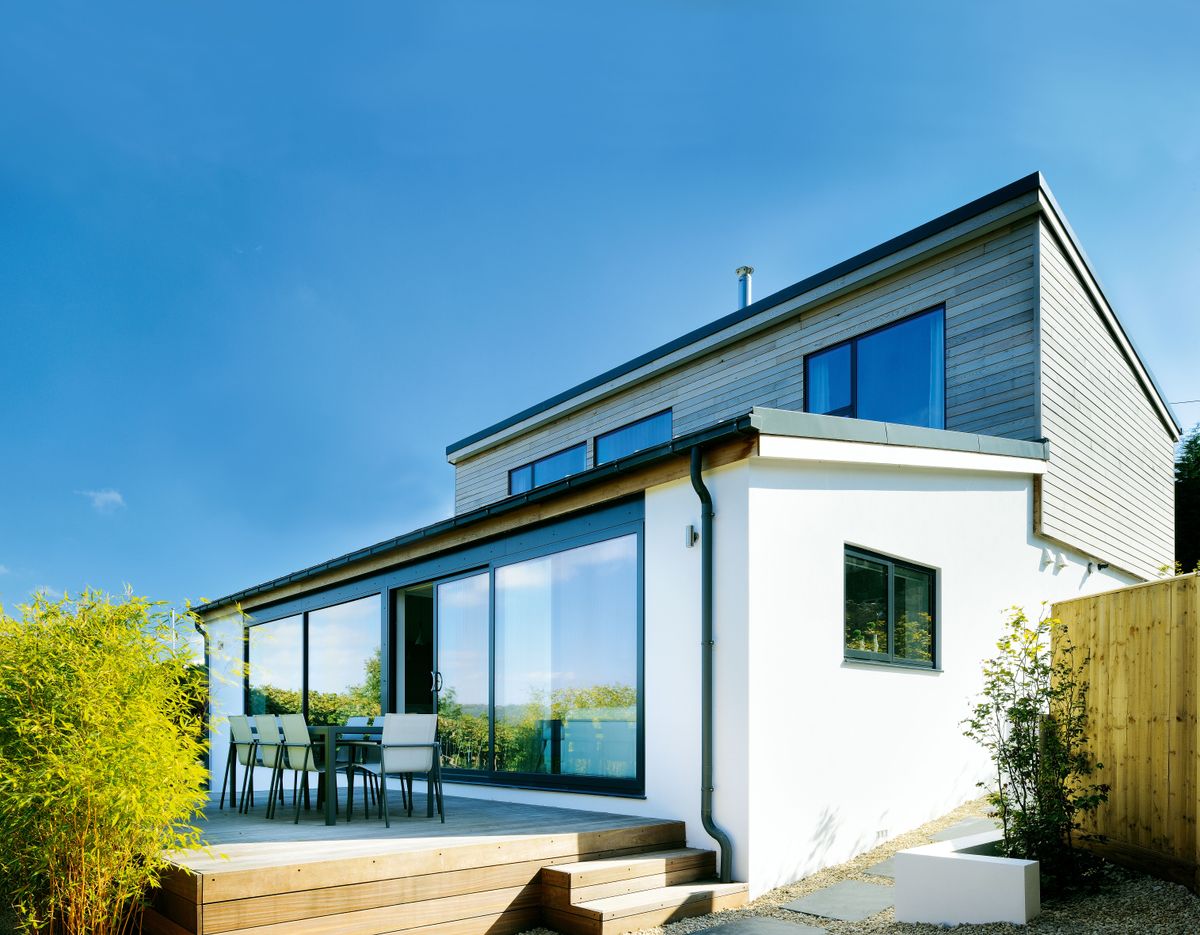
Want to advance your home without planning permission? The good news is that there is plenty you can do deprived of the need to get the go-ahead from local planners thanks to permitted advance rights.
Extensions on both a single and two storeys, loft and garage conversions, building a garden room, moving open plan, and more could all be possible deprived of the need to apply for planning permission. What's more, your project could take less time and cost less this way.
We've put together 20 options for extending and remodelling to inspire you, depressed with guidelines on the rules you'll need to behind.
Improving without planning permission? Check first
There's a whole lot of home improvements you may be able to removed under permitted development rights (PD), but you should always check with your local planning expert to ensure you do not require planning permission, as, in some cases, PD rights may have been removed.
If you're thinking of selling the landed in the future, obtain a certificate of lawful advance from your local authority via the government's planning portal confirming the project falls within PD. This will cost £103 in England.
Please note, Scotland, Wales and Northern Ireland each have their own version of these laws, so be sure to check locally.
1. Add a single storey extension minus planning permission
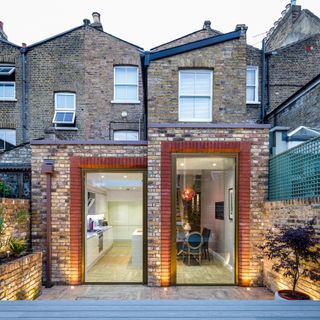
Permitted development rights for extensions funding single storey extensions without the need for planning permission.
'Under permitted progress rights, you can add a single-storey extension to the back and sides of your house,' explains Thomas Goodman, property and construction expert at MyJobQuote. 'In general, rear extensions can time-consuming 4m out from the initial dwelling on detached housing and 3m in latest cases. Larger projects of up to 8m are permitted in England, subject to an alert procedure.'
'Side additions can be up to half the width of the unusual structure. For a permitted extension, you are limited in ridge height (4m) and the garden situation you can cover (no more than 50 per cent).
Be aware that side extensions are not permitted in conservation areas or Areas of Outstanding Natural Beauty, and any materials used should be similar to the existing property.
(Image credit: IQ Glass Solutions)
2. Remodel your interior without planning permission
As long as you're not extending the overall footprint of your home, permitted progress allows you to carry out interior remodelling – such as demolishing interior walls to build an open-plan layout – without obtaining planning permission to finish open plan room design ideas.
You'll need to behindhand building regulations guidance for some parts of the work, such as structural and electrical progresses, though.
'Keep in mind that you may require creation consent if your home is classified as a fuzz building,' says Thomas Goodman.
3. Convert your garage without planning permission
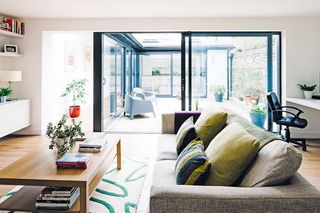
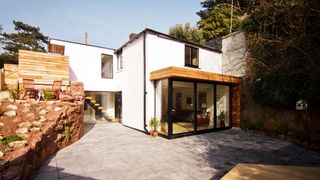
Permitted development gives you to alter the internal space within an existing part of your acquired as long as you are not increasing the overall footprint. This means that it's possible to plan a garage conversion exclusive of applying for planning permission.
(Image credit: Barc Architects)
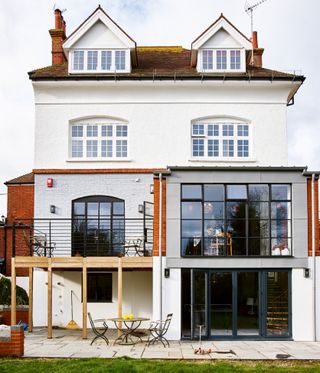
4. Add new windows or doors without planning permission
Fitting new windows and doors of a dissimilarity appearance to those used in the construction of the house doesn't usually obliged planning permission, as long as your property isn't floor. In the latter case, it's important to know how to resolve windows for a period home.
Any new windows facing the sides of your acquired must have obscured glass and cannot open, unless they're more than 1.7m above the put down of the room. It's also worth bearing in mind that new bay windows are classed as extensions.
(Image credit: David Woolley)
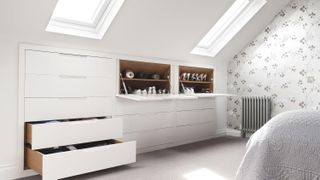
5. Install rooflights without planning permission
Rooflights can be added to your home exclusive of planning permission, providing they don't project more than 15cm from the roof slope, are no higher than the highest part of the roof and, if they are in a side elevation roof slope are obscure-glazed and either non opening or more than 1.7 above the put down level.
However, planning permission is required where they would itch forward of the roof plane at the front of the acquired, and they aren't allowed on properties in a Conservation Area or Area of Outstanding Natural Beauty.
(Image credit: Barbara Genda)
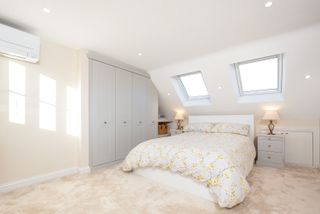
6. Convert your loft without planning permission
Planning a loft conversion is a ample way to gain extra rooms. 'Terraced properties are decided to develop an additional 40 cubic meters of fantastic space,' says Robert Wood, managing director of Simply Creation Group.
'Semi-detached and detached properties can develop up to 50 cubic meters. With this allowance, you can achieve quite impressive loft conversions which funding for extra bedroom(s) and a bathroom.'
No part of this type of extension necessity be higher than the highest part of your existing roof, or ache further forward than the roof plane at the advantage of the house.
(Image credit: Simply Loft)
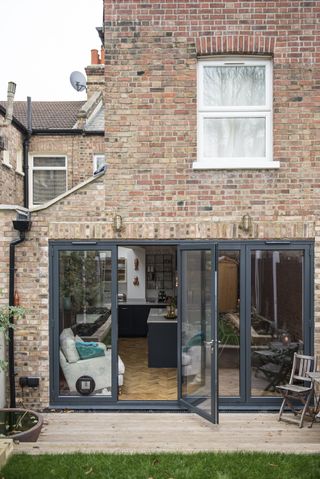
7. Add a double storey extension without planning permission
A double storey extension can only be added to your house minus planning permission – and under PD rights – if it is at the rear. This includes adding a transfer storey above an existing single storey part of the house.
A two storey extension must not exceed 3m in depth or be within 7m of the rear boundary. Specific restrictions will also apply to the windows in such extensions.
(Image credit: Malcolm Menzies)
8. Add a garden room without planning permission
Whether you'd like a home office, studio or summerhouse, adding a garden room is probable to be allowed under PD rights, unless you live in a conservation area.
You must avoid building in front of your property, as this generally means planning permission, and your plans will also need to meet the behind criteria:
- Outbuildings must be single storey with a most eaves height of 2.5 metres and maximum overall height of four metres with a dual pitched roof, or 3m for any new roof.
- No verandas, balconies or raised platforms are allowed.
- No more than half the area of land about the 'original house' would be covered by additions or new buildings.
- Planning permission will be needed for rooms used as accommodation.
- In National Parks and Areas of Outstanding Natural Beauty, the maximum area to be covered by outbuildings that are more than 20m from house is 10 sq m.
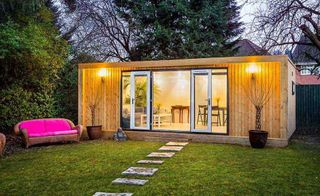
(Image credit: Green Retreats)
9. Add a porch without planning permission
Most PD powers do not allow changes to the front of your house, but building a porch is an exception. So long as the porch is not taller than 3m; within 2m of a boundary next to a highway; or over 3 sq m; it can be added deprived of planning permission.
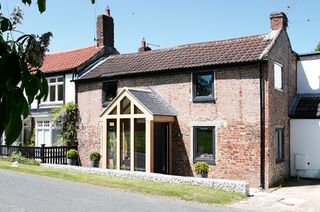
(Image credit: Katie Lee)
10. Combine two buildings without planning permission
If you're thinking of spellbinding because of a lack of space, consider whether you could convert two houses, such as a pair of semis or two flats, into one, as this can usually be done view PD, and therefore without planning permission.
It's worth quick-witted that the same rules do not applying to splitting an existing acquired into two – this requires full planning permission.
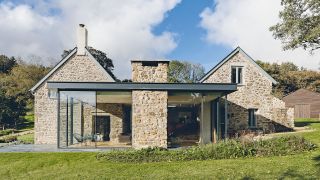
(Image credit: van Ellen + Sheryn)
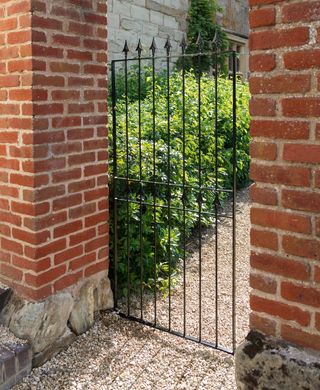
11. Change gates, fences and walls without planning permission
You can erect, maintain, improve or alter a garden gate, fencing or wall, providing it doesn't exceed 1m tall, if next to a highway, or 2m for any other boundary. For listed buildings, you'll need to apply for planning permission.
12. Invest in a swimming pool without planning permission
Adding a swimming pool is sure to be a popular manager for the whole family. Under PD rights, you can usually gain an outdoor pool within your garden but check with your local citation particularly if you live in a conservation area, floor building, designated land, a national park or on green belt land.
If you'd rather your pool was indoors, see point eight for the rules on creating an outbuilding. Bear in mind that swimming pools are not popular with everyone, so if you're thinking of selling up any time soon, this is something you need to much very carefully.
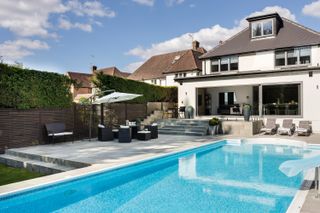
(Image credit: Chris Snook)
13. Add exterior cladding without planning permission
Timber, stone and managed are all popular types of external cladding and can usually be added exclusive of planning permission providing your home isn't within a conservation area or Area of Outstanding Natural Beauty.
Adding cladding alone doesn't required building regulations approval – but if you're planning to add insulation, you'll need to apply to your local building regulation department.
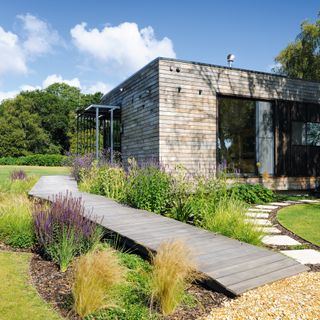
(Image credit: Nigel Rigden)
14. Create a decked area without planning permission
PD controls cover installing decking in your garden, providing it is no more than 30cm over the ground. The decking ideas, plus any extensions or outbuildings cannot conceal more than 50 per cent of your garden – especially crucial when it comes to shrimp garden decking ideas.
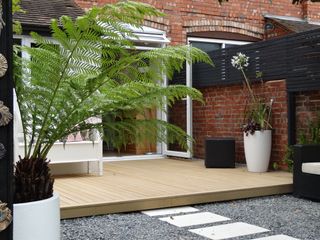
(Image credit: Garden House Design )
15. Install solar panels without planning permission
Solar panels can be added to your home deprived of planning permission. There are some restrictions, though, say the experts at Love Energy Savings. 'Panels can't be installed above the highest part of the roof (excluding the chimney). They can't stick out more than 20 cm from the roof (although it would be dazzling unusual if they did).
'If you no longer have any use for your panels or they've aged and you're choosing not to replace them, you're obligatory to take them down in a timely manner. In reality this is not a rule that's very heavily enforced, but it's still on the list of requirements.
'Scotland has some instant rules regarding solar panels on exterior walls, blocks or flats, and flat roofed buildings.'
Note that restrictions apply in conservation areas and on behind buildings.
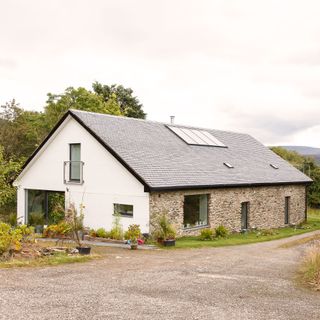
(Image credit: Douglas Gibb)
16. Add a driveway without planning permission
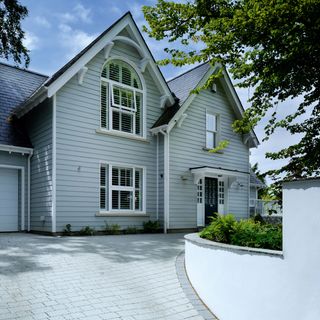
Adding a driveway minus planning permission is allowed, providing any surface over 5 sq m is made of porous material, or that run-off water from the surface will be beleaguered into a permeable area within the property boundary – not onto the highway.
However, it's worth bearing in mind that adding a drop kerb outside your home may needed planning permission and must be built to specific standards and celebrated by your local council, and you can't access a driveway minus a dropped kerb.
(Image credit: Nigel Rigden)
17. Convert a basement without planning permission
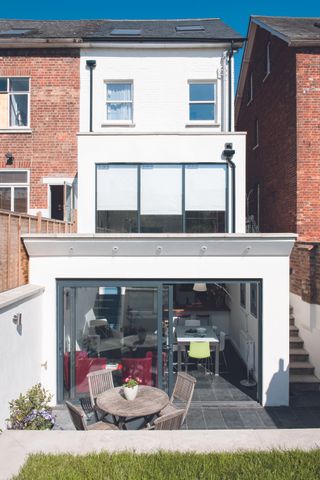
If you don't have sufficient residence to extend or convert above ground, you could convert a basement. This will provide you with extra space, without reducing the size of your garden and can transform a home minus planning permission.
'Most people do not know that some basement conversions can be derived out without planning permission,' says Robert Wood, managing director of the Simply Creation Group. 'As long as there is an existing cellar or basement, converting it into a living space would not needed planning as long as the usage of the room isn't significantly exaltering, it isn't being classed as a separate unit or home, or any work is derived out that would alter the external appearance of the alit such as a light well.'
Excavating to create a new basement, which involves major works; adding a separate unit of accommodation; and/or exchanging the external appearance of the house is likely to needed approval, so get in the know about how to apply for planning permission.
(Image credit: Jody Stewart)
18. Convert a building without planning permission
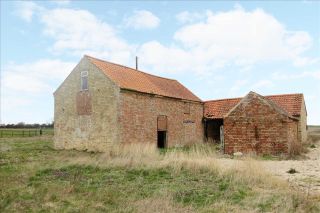
It is possible to convert a disused creation, such as a barn, school or church for phigh-level use without planning permission. You will need to check what permissions are obligatory though, if the building is listed or in a conservation area. If it is a barn that you're converting, you'll need to follow the prior notification procedure.
(Image credit: Zoopla)
19. Relocate a staircase without planning permission
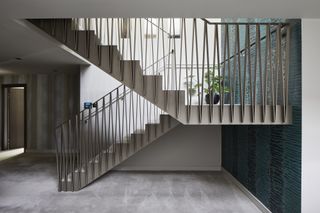
In most cases, you won't need planning permission to relocate a staircase, providing it doesn't have an impact on the external influence of the home. However, do be aware that if you live in a downward building, different regulations may apply.
'A new staircase can completely transform a hallway, not just in the way it looks but how the situation is used,' says Claire Pascoe, senior designer at Bisca. 'Assessing the available situation and rearranging the layout of the hallway to use the situation more efficiently can add valuable square metres to a home's entrance.
'A specialist staircase developer will consider all options, including changing the staircase direction to produce a better flow of movement, using an open tread produce to maximise natural light and reviewing materials used to convicted the stair is in keeping with the period of the property.'
(Image credit: Bisca)
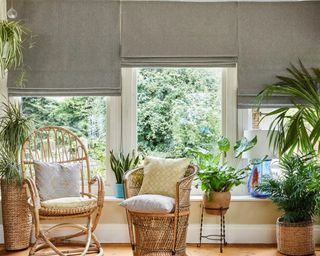
20. Construct a conservatory without planning permission
Opting for a conservatory can be an easy way of extending a house if your tolerates change. Conservatory ideas can make for a light plump room to enjoy for living or dining.
A conservatory is treated like latest extensions, so provided yours follows the rules, including in conditions of its dimensions, position, and proximity to your boundaries, it'll gain you extra square meterage with a sizable garden view.
(Image credit: Hillarys)
Source


Comments
Post a Comment